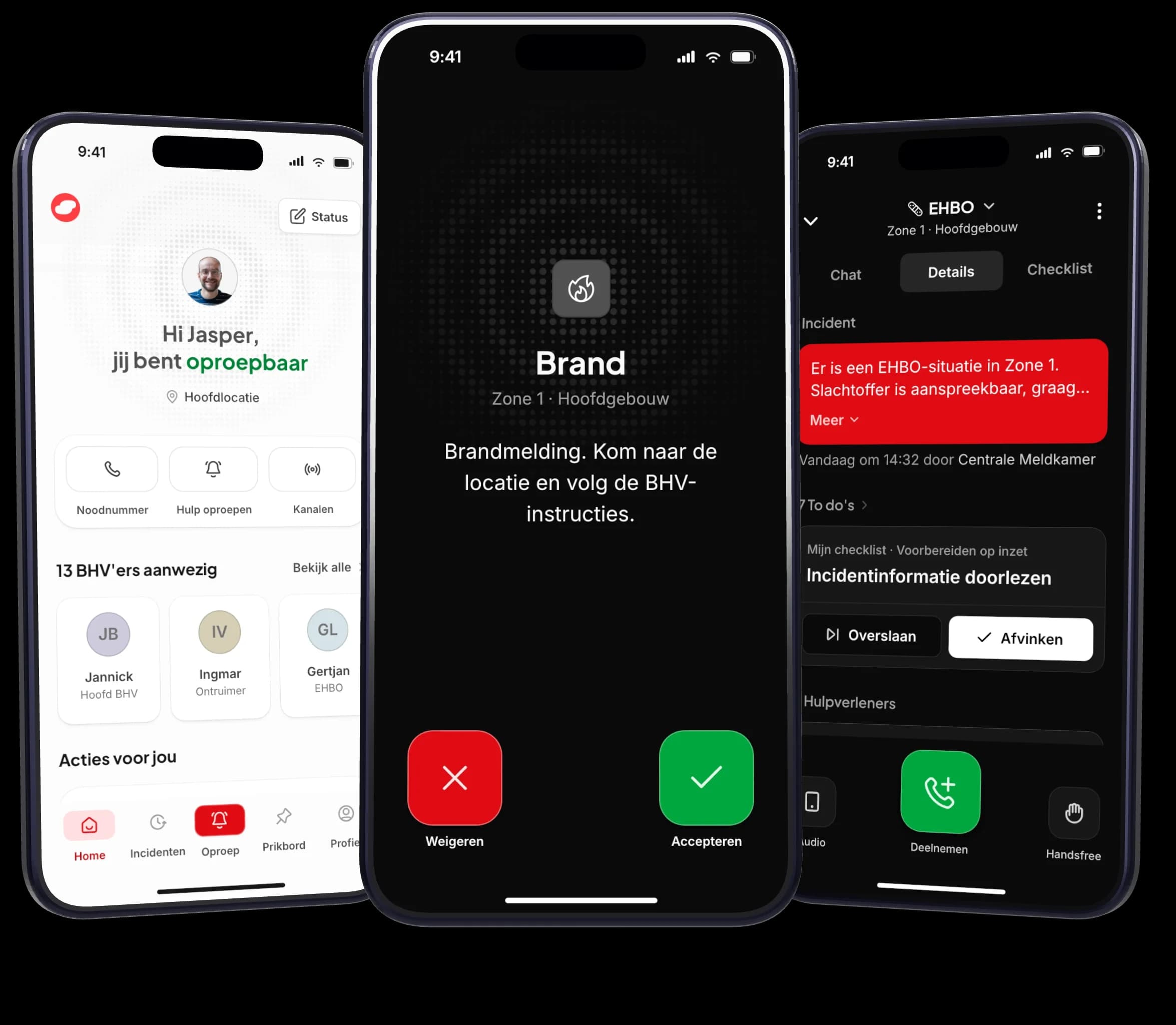
Clickable, interactive designs at an early stage that are nearly indistinguishable from the final product.
A prototype realistic enough that people react to the product rather than to the placeholder. We build clickable prototypes with real content, working states and the micro-interactions that make an interface feel like software instead of a slideshow. We use them for user testing, for stakeholder demos or to settle a question before development starts.
Typically 5–15 days
Scope
We agree on the question the prototype has to answer and the tasks a tester goes through to answer it. Those tasks work from start to finish; anything outside them is on screen but does not respond.
Build
Clickable, with real content and working states rather than lorem ipsum.
Detail
We add the details whose absence gives a click-through away: a button that shows it is working, a confirmation after saving, a screen that slides in instead of jumping.
Use
We put it in front of users in a test, or stakeholders in a demo. Where people get stuck or hesitate, we change the design, and the next round tests the new version.
More and more often in code. With AI we can build a prototype in little time that already comes close to the real product: real screens, real interactions and, where it matters, real data. When the question is about a single flow and Figma is faster, we use Figma.
Much of it, yes. The heavy lifting is in the flows and interactions, and by the end of the prototype those are thought through and tested. We usually build on a design system and keep the prototype as close to the real product as we can, so screens and components often carry straight over. Expect one more round on top: a prototype is there to gather feedback, and feedback changes things.
Real enough that a tester does not notice it is a prototype. That decides what you get back. If it looks fake, the feedback is about the fake: 'we don't use photos like that', 'this text means nothing to me' or people who cannot picture themselves in a gray sketch. If it looks real, they react to the product itself: whether they find what they are looking for, and whether they understand what is happening.